

Do you feel a sharp pinch in your knee when you climb stairs? Or maybe a dull ache that just won’t go away after sitting for too long? You are not alone. Knee pain is one of the most common complaints we see at Threads Physio, affecting everyone from young athletes to grandparents.
We often think of physiotherapy, exercises, and rest as the only ways to fix knee pain. But did you know that what you put on your plate is just as important as the exercises you do?
Think of food as fuel. If you put the wrong fuel in a car, the engine knocks. If you feed your body the right knee pain food to eat, you can actually turn down the “heat” (inflammation) inside your joints and build stronger cartilage.
In this guide, we have combined the best advice from top nutritionists and orthopedic experts to give you a complete list of foods that fight pain. Let’s dive in!
Why Does Food Matter for Your Knees?
Your knees are like hinges. Over time, or after an injury like an ACL tear, these hinges can get rusty (inflamed).
- Inflammation is your body’s alarm system. It causes swelling, redness, and pain.
- Anti-inflammatory foods act like a fire extinguisher. They calm this alarm down.
- Building blocks like Calcium and Protein help repair the bone and muscle supporting the knee.
By changing your diet, you aren’t just masking the pain—you are helping your body fix the problem from the inside out.
Top 15 Foods to Eat for Knee Pain Relief
We have analyzed the top recommendations from medical experts worldwide. Here is the ultimate “Superfood List” for your knees.
1. Fatty Fish (The #1 Inflammation Fighter)
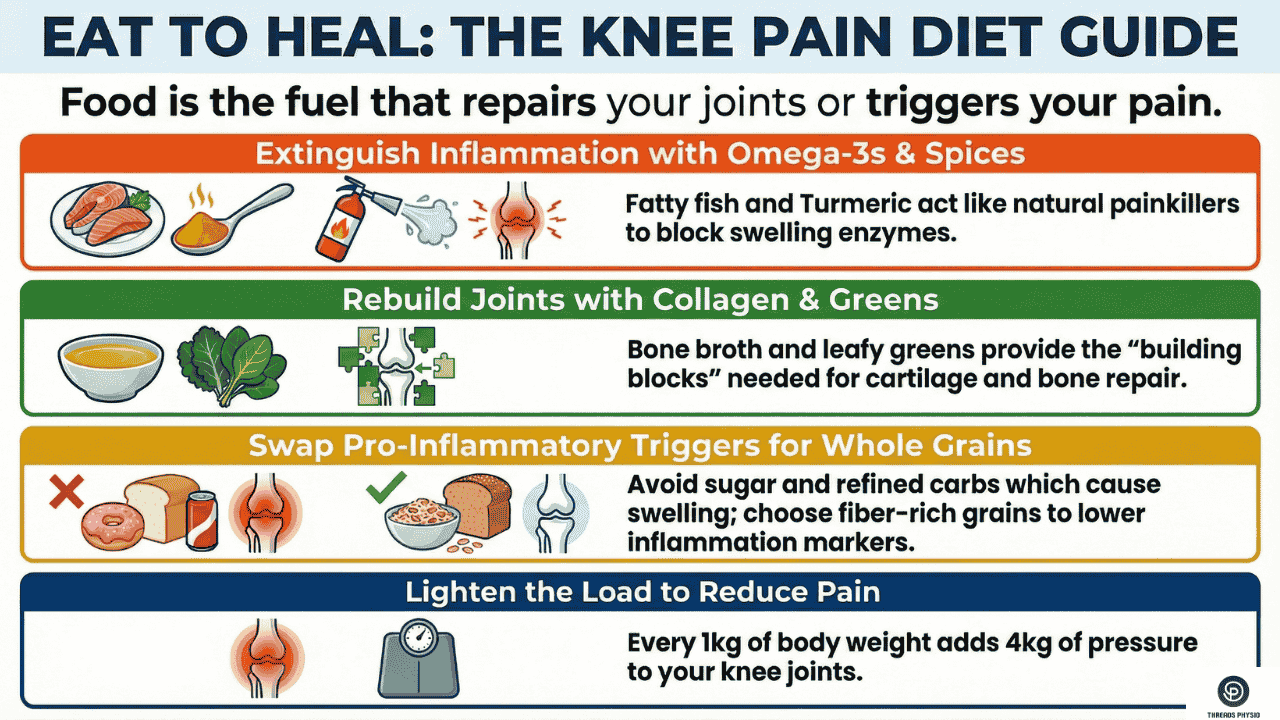
If there is one knee pain food to eat you should start with, it’s fatty fish. Fish like Salmon, Mackerel, Sardines, and Tuna are packed with Omega-3 fatty acids.
- Why it helps: Omega-3s work like natural painkillers (similar to ibuprofen) by blocking the chemicals that cause swelling.
- How to eat it: Aim for 2 servings a week. Grilled or baked is best!
2. Dark Leafy Greens
Your mom was right—eat your greens! Spinach, Kale, Broccoli, and Mustard Greens (Sarson) are loaded with Vitamin D, Vitamin C, and antioxidants.
- Why it helps: They reduce oxidative stress (damage to cells) and contain Calcium to keep your knee bones strong.
- Pro Tip: Add a squeeze of lemon to your spinach to help your body absorb the iron better.
3. Berries (Nature’s Candy)
Blueberries, Strawberries, Raspberries, and Blackberries are not just delicious; they are powerful medicine.
- Why it helps: They are full of anthocyanins—a fancy word for the pigment that gives them their color. This pigment creates a powerful shield against inflammation in your joints.
4. Nuts and Seeds
Don’t like fish? No problem. Walnuts, Almonds, Flaxseeds (Alsi), and Chia Seeds are excellent plant-based sources of Omega-3s.
- Why it helps: They provide healthy fats and Magnesium, which helps relax tight muscles around the knee.
- How to eat it: Sprinkle chia seeds on your yogurt or eat a handful of walnuts as a snack.
5. Olive Oil
Swap your regular vegetable oil for Extra Virgin Olive Oil.
- Why it helps: It contains a compound called oleocanthal, which has been proven to have similar effects to anti-inflammatory drugs. It’s great for heart health too!
6. Turmeric (Haldi)
This golden spice is a staple in Indian kitchens for a reason.
- Why it helps: It contains Curcumin, a superstar compound that blocks inflammatory enzymes. It is incredibly effective for arthritis treatment.
- How to eat it: Drink warm “Golden Milk” (Haldi Doodh) with a pinch of black pepper (pepper helps your body use the turmeric).
7. Ginger and Garlic
These powerful roots do more than flavor your curry.
- Why it helps: Ginger reduces joint pain significantly when eaten regularly. Garlic contains diallyl disulfide, which fights the enzymes that damage cartilage.
8. Bone Broth
This is an ancient remedy making a comeback.
- Why it helps: It is rich in Collagen, Glucosamine, and Chondroitin—the exact stuff your cartilage is made of. It’s like drinking “joint oil.”
9. Sweet Potatoes
Orange vegetables like Sweet Potatoes, Carrots, and Pumpkin are rich in Beta-Carotene and Vitamin A.
- Why it helps: These nutrients fight inflammation and boost your immune system.
10. Whole Grains
Ditch the white bread and switch to Brown Rice, Oats, Quinoa, and Whole Wheat.
- Why it helps: Refined grains trigger inflammation. Whole grains have fiber that lowers a marker in your blood called CRP (C-Reactive Protein), which is linked to inflammation.
11. Beans and Lentils (Dal)
A great source of protein for vegetarians.
- Why it helps: You need protein to build the muscles (quadriceps and hamstrings) that support your knee. Strong muscles = less pressure on the joint.
12. Citrus Fruits
Oranges, Lemons, Grapefruits, and Limes.
- Why it helps: They are packed with Vitamin C. Your body needs Vitamin C to make collagen, which is the “glue” that holds your ligaments and tendons together.
13. Green Tea
Instead of your regular chai, try a cup of Green Tea.
- Why it helps: It is loaded with polyphenols, which are antioxidants that slow down cartilage destruction.
14. Avocados
- Why it helps: They are rich in heart-healthy monounsaturated fats and Vitamin E, which protects the knee joint from damage.
15. Dark Chocolate
Yes, you can have a treat!
- Why it helps: Chocolate with at least 70% cocoa contains antioxidants that fight inflammation. But eat it in moderation!
Foods to Avoid (The “Inflammation Triggers”)
Just as some foods heal, others harm. If you want your knee pain treatment to work, try to limit these:
- Sugar & Sweets: Sugar releases “cytokines” which increase swelling.
- Refined Carbs: White bread, pasta, and maida turn into sugar quickly in your body.
- Fried & Processed Foods: Chips, fries, and packaged snacks often contain unhealthy trans fats.
- Red Meat: Eating too much red meat can promote inflammation.
- Excessive Salt: Salt makes your body hold water, which puts more pressure on swollen joints.
- Alcohol: It weakens your body’s ability to heal.
Lifestyle Tips for Healthy Knees
Diet is a huge piece of the puzzle, but don’t forget these three pillars:
- Hydration: Your joint cartilage is mostly water. Staying hydrated keeps your knees lubricated.
- Vitamin D (Sunlight): Vitamin D is crucial for bone strength. Try to get 15 minutes of morning sun or ask us about supplements.
- Weight Management: Every extra kilo of weight puts 4 kilos of pressure on your knees! Losing even a little weight can provide massive relief.
Need Personalized Advice?
Every knee is different. Whether you are recovering from sports injury rehabilitation or dealing with chronic arthritis, we are here to help.
At Threads Physio, we combine advanced physiotherapy with holistic advice to get you back on your feet faster.
Ready to crush your knee pain?
📞 Call Us Now: 919310138022
💬 Chat with us on WhatsApp: Click Here to Chat & Get a Free Opinion
People Also Ask (FAQs)
Q: Can specific foods really cure knee pain?
A: Food cannot “cure” a tear or broken bone, but an anti-inflammatory diet can significantly reduce pain, stiffness, and swelling, allowing your body to heal faster.
Q: Is milk good for knee pain?
A: Yes, low-fat milk is rich in Calcium and Vitamin D, which strengthens bones. However, if you are lactose intolerant, dairy might cause inflammation, so switch to almond or soy milk.
Q: How fast will I see results from changing my diet?
A: It usually takes a few weeks of consistent healthy eating to feel a difference in your joint pain levels.