

Avoid Knee Replacement
with a Single
Stem Cell Injection
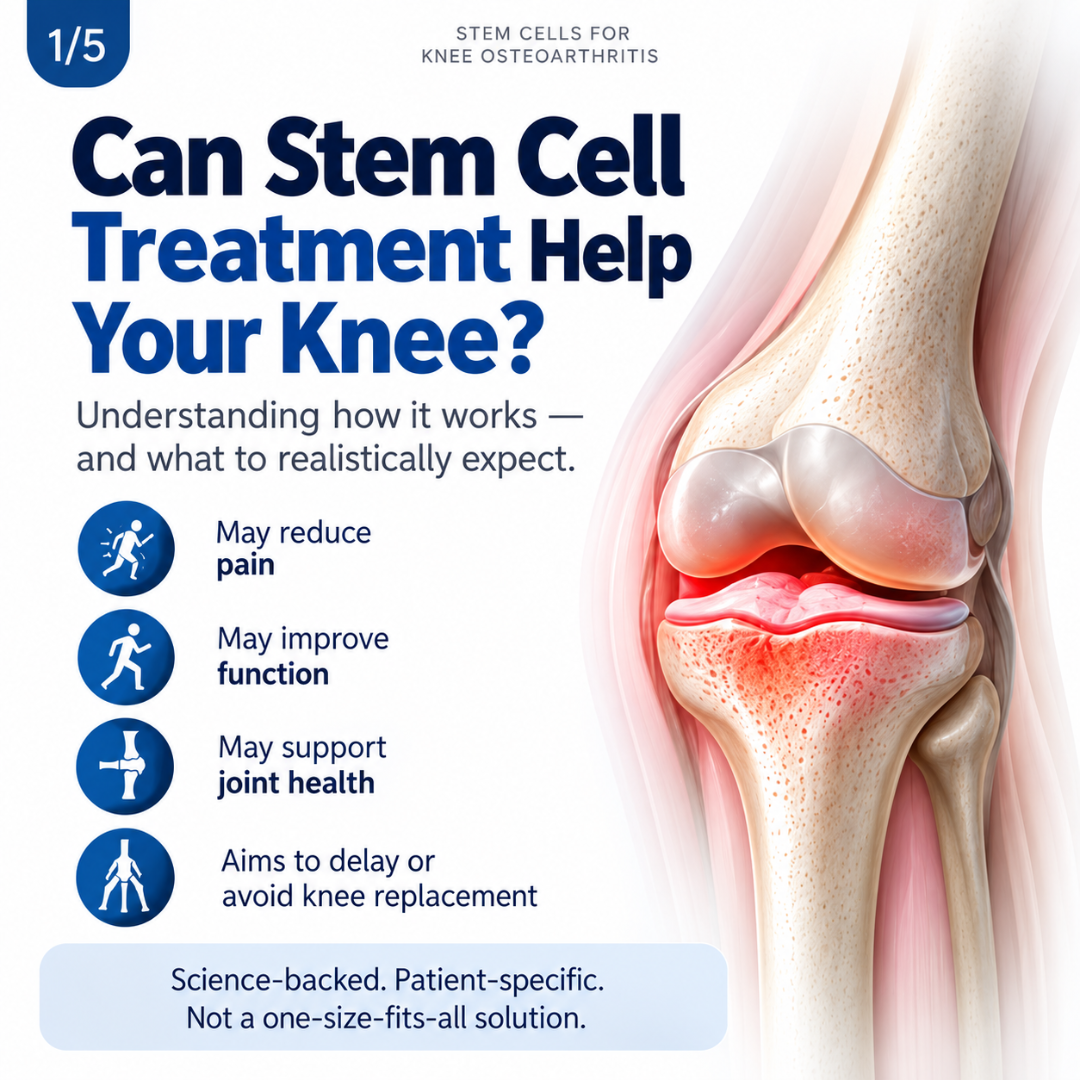
Your own bone marrow stem cells, precisely injected into the damaged subchondral bone beneath your cartilage — giving you 10–15 years of pain relief without surgery.
Hernigou et al. — 15-Year Follow-Up
regenerative procedure.
Why "Just Get a Knee Replacement"
Is Not Your Only Option
Millions of knee OA patients are told to wait for the pain to become unbearable before undergoing a major surgery. There is a better path.
Knee Replacement Is Permanent & Irreversible
Once your natural knee is replaced, there is no going back. A prosthetic joint lasts 15–20 years — and revision surgery is far more complex.
Long Recovery & Major Surgery Risk
TKR requires general or spinal anaesthesia, 3–5 days in hospital, and 3–6 months of physiotherapy. Complications include clots, infection, and stiffness.
Painkillers Only Mask the Problem
NSAIDs, steroid injections, and hyaluronic acid provide temporary relief but do nothing to address the underlying bone and cartilage damage.
Bone-on-Bone Doesn't Mean Surgery Is Inevitable
Even advanced osteoarthritis with subchondral bone lesions can be treated with targeted stem cell therapy — regenerating the damaged tissue from within.
How Stem Cell Injection
Works in One Day
No general anaesthesia. No hospitalisation. Your own cells harvested, concentrated, and precisely injected — all in a single session.
Bone Marrow & Adipose Harvest
A small sample of bone marrow is withdrawn from your iliac crest (pelvis) under local anaesthesia. Takes 20–30 minutes. Minimal discomfort. Adipose tissue (fat) may also be harvested for additional stem cells.
BMAC + AdipocyteConcentration & Activation
Your bone marrow is spun in a centrifuge to concentrate mesenchymal stem cells and growth factors. Adipocyte-derived stem cells may also be harvested from fat tissue.
BMAC / AdipocyteTargeted Intraosseous Injection
Using fluoroscopy guidance, stem cells are injected into the subchondral bone beneath cartilage damage — not just into the joint fluid. This is the Hernigou technique.
Subchondral TargetHome the Same Day
No overnight stay. Walk with assistance immediately. Begin gentle movement within days. Pain relief begins over 4–8 weeks as regeneration takes hold.
Day ProcedureWhere Are Your
Stem Cells Sourced?
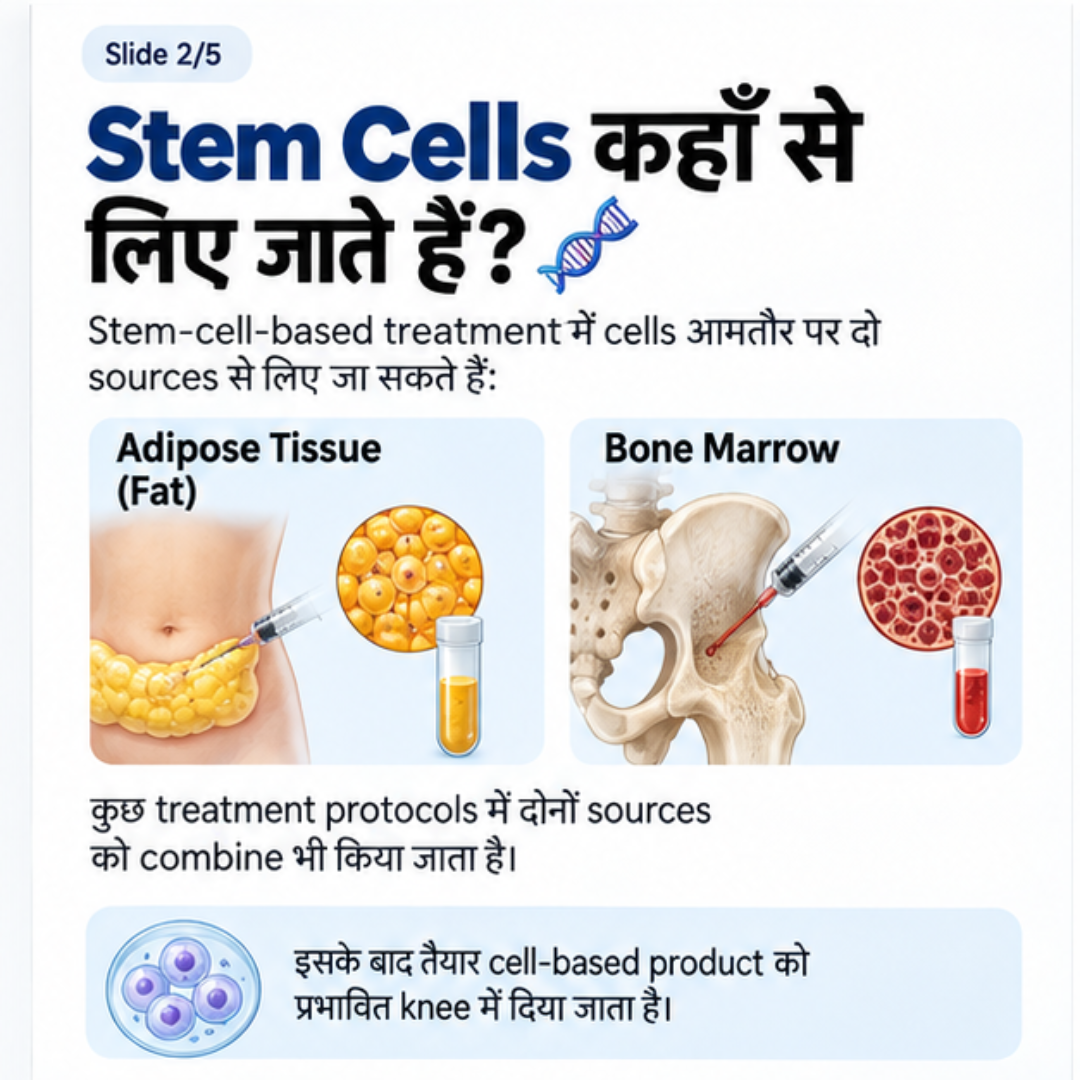
Stem cell treatments typically draw cells from two sources:
- ●Adipose Tissue (Fat): Harvested from abdominal fat, rich in growth factors
- ●Bone Marrow: Harvested from the iliac crest (pelvis), strongest evidence for bone regeneration
Some treatment protocols combine both sources. The prepared cell-based product is then delivered into the affected knee.
10 Years of Knee Pain.
Gone with One Injection.
Watch this patient describe how a single bone marrow stem cell injection — the same procedure Dr. Bora performs — ended over a decade of chronic knee pain. No surgery. No hospitalisation. Just her own cells doing the work.
"I had been living with this pain for 10 years. After one injection, I could finally walk without pain."
Backed by
Published Science
This is not experimental. Dr. Hernigou's randomised controlled trials — published in International Orthopaedics — show consistent 15-year results across hundreds of patients.
Bone Marrow MSC Injection vs Contralateral Arthroplasty — 15-Year Follow-Up
Prospective randomised study. Patients who received BMAC into subchondral bone significantly outperformed those who received knee replacement in the contralateral knee at 15 years. Over 85% avoided TKR in the treated knee.
View on PubMed →Subchondral vs Intra-articular BMAC: Which Better Postpones Arthroplasty?
Randomised study comparing intraosseous (subchondral) vs intra-articular injection. Subchondral injection was significantly superior at 15 years — confirming that targeting the bone beneath the cartilage is the critical difference.
View on PubMed →Subchondral Bone Regeneration
MRI-confirmed regeneration of subchondral bone marrow lesions — the root cause of "bone on bone" pain — not just symptom masking.
Your Own Cells — Zero Rejection Risk
Autologous stem cells (from your own body) carry no risk of immune rejection, disease transmission, or ethical concerns.
Superior to PRP & Hyaluronic Acid
BMAC demonstrated superior long-term outcomes versus both PRP and hyaluronic acid injections at 12-month and 15-yea@media (max-width: 768px)r follow-ups.
Patients Preferred Stem Cell Knee
In the head-to-head study, the majority of patients who had one knee replaced and one treated with BMAC preferred the stem cell-treated knee at 15 years.
Bone vs Joint Injection
Which Is Better?
Studies comparing subchondral bone and intra-articular injection approaches show better long-term outcomes with bone-targeted treatment.
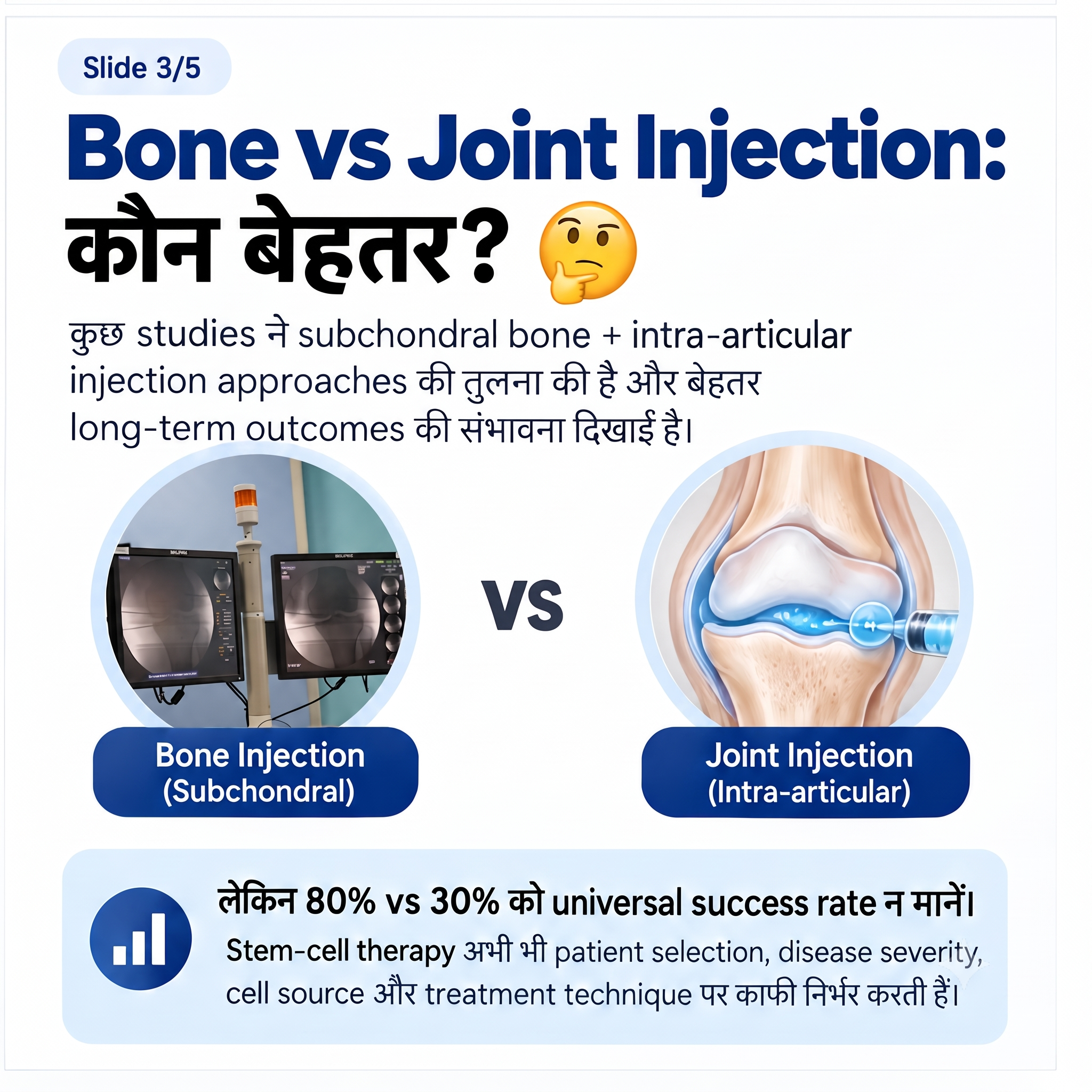
Important: 80% vs 30% should not be treated as a universal success rate — outcomes still depend heavily on patient selection, disease severity, cell source, and treatment technique.
Stem Cell Injection
vs All Other Options
| BMAC Stem Cell Injection | Knee Replacement (TKR) | PRP / Hyaluronic Acid | |
|---|---|---|---|
| Duration of Relief | 10–15+ years | 15–20 years (prosthetic life) | 6–12 months |
| Major Surgery | ✗ No | ✓ Yes — general anaesthesia | ✗ No |
| Hospitalisation | Day procedure | 3–5 days | Day procedure |
| Uses Your Own Cells | ✓ Yes | ✗ No — implant | Partial (PRP only) |
| Bone Regeneration | ✓ MRI confirmed | ✗ No | ✗ No |
| Reversible | ✓ Yes | ✗ No — permanent | ✓ Yes |
| Recovery Time | Days to weeks | 3–6 months | Days |
| Evidence (RCT) | ✓ 15-year RCT published | ✓ Well-established | Limited long-term data |
Why Targeting
the Bone Matters
Knee OA isn't just cartilage damage. The problem lives beneath the surface.
- ●Bone Marrow Lesions: Edema and dead bone areas trigger pain
- ●Microfractures: Tiny breaks in bone architecture destabilize the joint
- ●Inflammation: Chronic signals worsen cartilage degeneration
This is why joint-only injections fail: they don't address the bone beneath. Subchondral targeting regenerates the foundation.
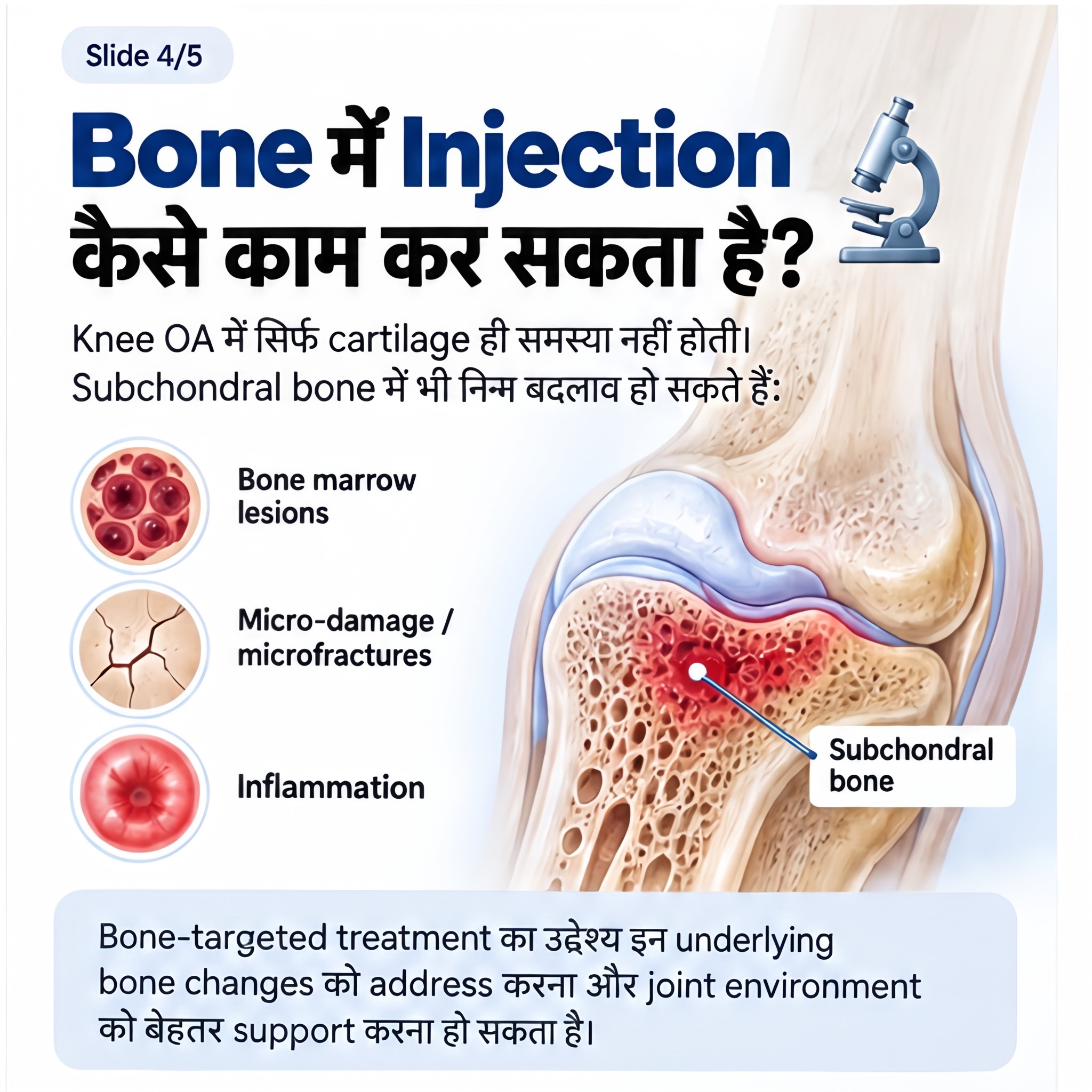
The red areas show bone damage that causes "bone-on-bone" pain
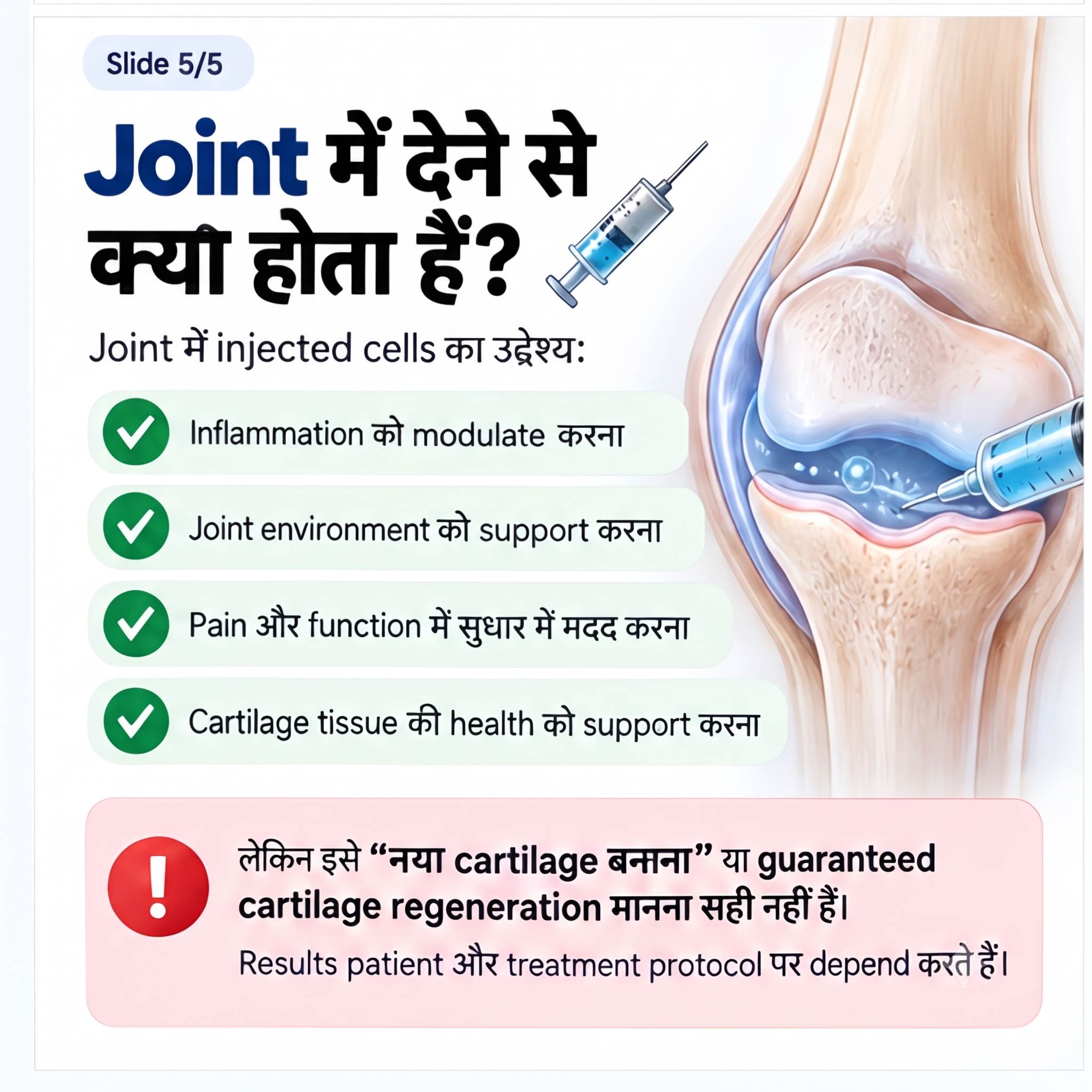
How Injected Cells
Work Inside
What Your Stem Cells Do:
- ✓Modulate Inflammation — Reduce joint swelling & pain signals
- ✓Support Joint Environment — Create conditions for healing
- ✓Pain & Function Improvement — Relief in 4–8 weeks
- ✓Cartilage Health Support — Growth factors aid tissue
⚠️ Important: This is NOT guaranteed new cartilage. Results depend on patient selection and disease severity.
Are You a
Good Candidate?
Not every knee OA patient qualifies. Send Dr. Bora your MRI report for a personalised assessment within 24 hours.
✓ Ideal Candidates
- Knee osteoarthritis Grade 2, 3, or early Grade 4
- Significant subchondral bone marrow lesions on MRI
- "Bone on bone" with visible edema / bone bruising
- Pain not adequately controlled by medications
- Wanting to avoid or delay knee replacement
- Age 45–80 with adequate general health
- Failed PRP or hyaluronic acid injections
- Active individuals who want to return to walking, travel, golf
✗ May Not Be Suitable
- Severe Grade 4 OA with complete joint collapse
- Active infection in or around the knee
- Severe valgus or varus deformity (may need correction first)
- Active autoimmune conditions on immunosuppressants
- Haematological malignancy or blood disorders
- Morbid obesity (BMI >40) — increases procedure risk
Not sure? Send your MRI. Dr. Bora will assess and be honest about whether you qualify.

Dr. Manu Bora
MS Orthopaedics
I offer bone marrow and adipocyte-derived stem cell injections for knee osteoarthritis based on the most rigorous published evidence in regenerative orthopaedics. If you have received advice to undergo knee replacement surgery, I encourage you to first explore whether your knee can be preserved. WhatsApp me your MRI — I will personally review it and give you an honest opinion within 24 hours.
Real Patients.
Real Results.
These are not cherry-picked outcomes. Watch patients describe what changed after a single stem cell injection — in their own words.
Transparent
Pricing
One procedure. One price. No hidden costs. Compared to knee replacement — which costs ₹3–7 lakh plus months of rehab — this is exceptional value.
- Pre-procedure MRI review & consultation with Dr. Bora
- Bone marrow harvest from iliac crest under local anaesthesia
- BMAC concentration & preparation (adipocyte cells if applicable)
- Fluoroscopy-guided intraosseous subchondral injection
- Post-procedure recovery & rehabilitation guidance
- ThreadsPhysio rehabilitation protocol
- 1-month follow-up consultation
Cost valid for Gurgaon & Mumbai clinics. Prices subject to review based on clinical complexity. EMI options may be available — enquire via WhatsApp.
Frequently Asked
Questions
Yes. We use autologous stem cells — harvested from your own bone marrow and fat tissue. There is zero risk of immune rejection or disease transmission. The procedure has been performed and studied since the 1990s by Dr. Hernigou and published in peer-reviewed journals. Serious complications are extremely rare.
Published randomised controlled trial data from Dr. Hernigou shows that over 85% of patients avoided knee replacement for a mean of 15 years after a single injection. Individual results vary based on age, severity, and lifestyle. Most patients experience meaningful pain relief beginning at 4–8 weeks, with continued improvement over 6 months as regeneration progresses.
BMAC (Bone Marrow Aspirate Concentrate) harvests mesenchymal stem cells from the pelvis (iliac crest) — these have the strongest published evidence for subchondral bone regeneration. Adipocyte-derived stem cells come from fat tissue (usually abdominal fat) and are rich in regenerative growth factors. Dr. Bora may use either or both based on your clinical picture and MRI findings.
Not necessarily. Even Grade 3–4 OA with subchondral bone lesions may qualify, especially if you have significant bone marrow edema on MRI. The best way to know is to share your MRI with Dr. Bora directly via WhatsApp. He will give you a frank assessment of whether stem cell therapy is appropriate for your case.
Most patients walk with assistance on the same day. Light activities resume within 1–2 weeks. A structured physiotherapy programme (via ThreadsPhysio) begins at 2 weeks. Full pain relief typically develops over 4–12 weeks as the regenerative process matures. Avoid high-impact activities for 6 weeks post-procedure.
Controlled diabetes and hypertension are generally not contraindications. Dr. Bora will review your full medical history and medications before proceeding. Well-controlled systemic conditions do not typically affect the outcome of the procedure.
Yes. Bilateral knee injections can often be performed in the same session — one bone marrow harvest can provide enough concentrate for both knees. This reduces total cost and recovery time compared to two separate procedures. Discuss this with Dr. Bora at your consultation.
Don't Agree to Knee Replacement
Before Getting a Second Opinion
WhatsApp your MRI report to Dr. Manu Bora. You'll receive a personal reply within 24 hours — completely free.